
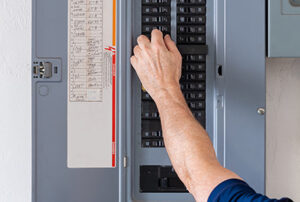
If a circuit breaker keeps tripping, it is usually your electrical system’s way of warning you that something is wrong. While resetting a breaker once may solve a temporary problem, a breaker that repeatedly trips should not be ignored. Understanding the possible causes can help protect your home, appliances, and family from electrical hazards.
Circuit Overload
One of the most common reasons a circuit breaker trips is an overloaded circuit. Every electrical circuit is designed to handle a specific amount of electrical current. When too many appliances are operating on the same circuit, the electrical demand can become too high. The breaker trips to prevent the wiring from overheating.
Large appliances such as air conditioners, refrigerators, microwaves, and space heaters can place significant demands on your electrical system.
Short Circuits
A short circuit occurs when electricity takes an unintended path, often because of damaged wiring or a faulty electrical connection. Short circuits can cause a breaker to trip immediately and may create a serious fire hazard.
If a breaker trips whenever you turn on a particular appliance, that appliance or its wiring could be the source of the problem.
Ground Faults
Ground faults happen when an energized electrical wire comes into contact with a grounded surface or wire. They are particularly concerning in areas where electricity and moisture are present, such as kitchens, bathrooms, garages, and outdoor locations.
Ground-fault circuit interrupters (GFCIs) are designed to help protect people from these types of electrical hazards.
Faulty Appliances
Sometimes the electrical circuit isn’t the problem. A defective appliance may have damaged wiring or an internal electrical fault that causes the breaker to trip. If the breaker consistently trips when you use one particular appliance, stop using it and have the appliance or circuit inspected.
Aging or Defective Breakers
Circuit breakers can wear out over time. An old or defective breaker may trip even when the circuit isn’t overloaded. An electrician can test the breaker and determine whether replacement is necessary.
When Should You Call an Electrician?
If a breaker repeatedly trips, don’t simply keep resetting it. Frequent tripping indicates that the electrical system needs attention. An electrician can inspect the panel, wiring, outlets, and connected appliances to identify the underlying cause.
Never attempt electrical repairs yourself if you are not qualified to work with electrical systems. Professional electrical service can help identify problems safely and reduce the risk of electrical shock or fire.
A circuit breaker is an important safety device in your home. If it keeps tripping, consider it a warning—not an inconvenience. Getting the problem properly diagnosed can help keep your electrical system safe, reliable, and operating properly.
All In One Electrical provides electrical services in Clearwater, Dunedin, Tampa, Hillsborough County and the surrounding Tampa Bay area.
For more information, visit our website, https://electriciantampabay.net/
or call (813) 513-9593.